
Your teeth do more than help you smile—they affect how you eat, speak, and maintain overall health. When even one tooth is missing, the balance of your bite changes. Nearby teeth may shift, extra stress is placed on the remaining teeth, and over time, the jawbone begins to shrink where the tooth once was. Within the first year, you can lose up to 25% of the supporting bone, which may change your appearance and make future treatment more complex.
The good news: there are many effective options for replacing missing teeth—ranging from simple, temporary solutions to permanent, natural-looking restorations. Replacing a missing tooth early helps protect your smile, preserve bone, and maintain comfort and function for years to come.
Tooth Replacement Options
Flipper
A flipper is a small, removable plastic tooth attached to a plastic retainer.
- Often used as a temporary solution after an extraction
- Lightweight, affordable, and easy to make quickly
- Best for short-term use
Removable Partial Denture
A metal and acrylic appliance that replaces several missing teeth.
- Held in place by small clasps around nearby teeth
- Can be removed for cleaning
- More durable than a flipper but may still move slightly during eating
- Is removed nightly for cleaning
Complete Denture
A full set of removable teeth used when all teeth in one jaw are missing.
- Restores appearance and function
- Upper dentures tend to fit securely; lower dentures can feel less stable
- May require adjustments over time as the jawbone changes
- Is removed nightly for cleaning
Fixed Bridge
A set of connected crowns anchored to healthy teeth on either side of the gap.
- Looks and feels natural
- Remains in place all of the time
- Requires reshaping of the neighboring teeth for support
- Hygiene modifications are needed as special floss or a water flosser is required to clean under the bridge
Dental Implants (Best Long Term Solution)
A titanium post placed in the jawbone to replace a missing tooth root. Once healed, a crown is attached, creating a tooth that looks and functions like your own.
- Preserves bone and reduces jaw shrinkage
- Does not affect nearby teeth
- Can replace a single tooth, multiple teeth, or even a full arch
- Can last a lifetime with proper care
Implant-Supported Options for Multiple or Full-Arch Tooth Loss
If you’re missing all or most of your teeth, dental implants can provide strong, comfortable support for your new smile. The options differ slightly between the lower and upper jaws because of bone density and anatomy.
Lower Jaw Options
Many people find traditional lower dentures unstable or uncomfortable. Implant support can dramatically improve stability and function.
- Ball Attachment Denture: Two implants are placed in the lower jaw, and a denture “snaps” onto them for better chewing stability. Some movement is still possible, and occasional adjustments may be needed.
- Bar Attachment Denture (Overdenture): Four implants connected by a support bar hold a denture that securely clips into place. This design allows much less movement and improved comfort while remaining removable for cleaning.
- Screw-Retained Fixed Denture: Five or more implants anchor a permanent full-arch restoration that does not come out. It feels most similar to natural teeth, though cleaning requires special tools and in-office maintenance.
- Individual Implants: Each tooth is replaced with its own implant and crown for the most natural look and function. This is the most comprehensive and longest-lasting solution.
Upper Jaw Options
Because the bone in the upper jaw is softer, more implants are usually needed for full support:
- Implant-Retained Upper Denture: Four or more implants hold a removable denture in place. In many cases, the design can leave the roof of your mouth uncovered, allowing better taste and comfort.
- Screw-Retained Fixed Denture/Same Day Smiles or Individual Implants: For a permanent, non-removable solution, five to six implants are often placed to support a full set of replacement teeth or individual crowns that look and feel completely natural.
Which Option Is Right for You?
- The best solution depends on:
- How many teeth are missing
- The health and shape of your jawbone
- Your lifestyle and personal preferences
Dr. Barack or Dr. Gupta will take detailed X-rays, discuss your goals, and recommend the treatment that offers the best balance of comfort, stability, and long-term health.
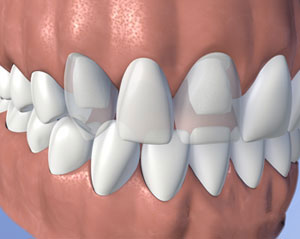
Fixed Bridge
A fixed bridge is a connected set of replacement teeth. For support, it is cemented into position on top of the teeth adjacent to the empty space. The protective outer layer of these teeth is usually removed or ground down prior to attaching the bridge.
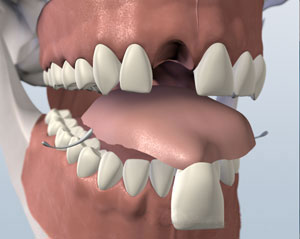
Flipper
A fragile, temporary and inexpensive solution is a removable plastic tooth with a plastic retainer, often called a “flipper”.
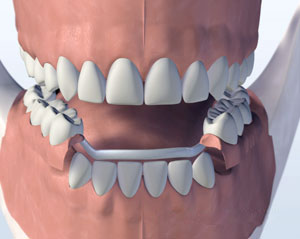
Metal Partial
A less fragile option is a removable partial denture cast in metal and plastic. It is held in place by wire clips. A removable partial denture can be removed and reinserted when required by the patient.
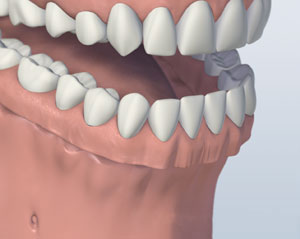
Denture
The most common solution, for people missing all teeth in one or both jaws are complete dentures. Some people adapt well to dentures. Others find them uncomfortable, even intolerable, because of differences in jaw size and shape.
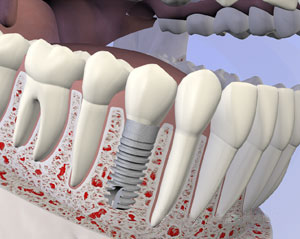
Dental Implants
Dental implants are the most comfortable and permanent solution. They form a strong foundation for teeth and keep the jaw healthy and strong. Implants support individual replacement teeth or secure specialized dentures in place. Unlike bridges, no healthy teeth are damaged. Unlike most bridges, implants can last a lifetime. Implant-supported replacement teeth can be attractive, stable, and comfortable for almost any patient.
Why select dental implants over more traditional types of restorations?
There are several reasons: A dental bridge can sacrifice the structure of surrounding good teeth to bridge the space of the missing tooth/teeth. In addition, removing a denture or a “partial” at night may be inconvenient, not to mention dentures that slip can be uncomfortable and rather embarrassing.